Controlling Water-Based Ink Runnability: How Viscosity & Temperature Drive Corrugated Box Machinery ROI
The fluid engineering guide to eliminating ghosting, dot deformation, and ink smudging on high-speed corrugated converting lines.
The Fluid Dynamics of Modern Ink Runnability (Printability)
In industrial box production, water-based ink printability determines the success of your entire converting floor. The passage of ink from the storage tank to the anilox roll, onto the printing plate, and ultimately onto the corrugated substrate is a delicate process of fluid transport, transfer, and separation.
While water-based inks run efficiently on porous paperboard as well as non-porous films and foils, achieving premium graphics requires two mechanical prerequisites: continuous, stable ink delivery to the photopolymer plate, and precise ink film separation onto the linerboard face. This process depends heavily on both the engineering accuracy of your Corrugated Packaging Machinery and the strict regulation of fluid viscosity.
Viscosity Engineering: The Critical Metrics for Flexo Plants
Viscosity represents the internal cohesive shear force of a fluid and serves as the primary control metric for water-based ink loops. While factories typically receive fresh ink stock rated at 30 to 60 seconds (measured via a #4 Zahn cup at 25°C), the optimal operational runnability range during active production sits tightly between 40 and 50 seconds. For modern flexographic architectures, maintaining a low viscosity profile between 0.15 to 0.3 Pa·s is necessary to protect print consistency. Deviating from these metrics introduces severe operational defects:
| Viscosity State | Production Failure Modes & Defects |
|---|---|
| Excessively High (>0.3 Pa·s) | Ink fails to fully enter the microscopic cells of the anilox roller; doctor blades fail to shear cleanly across roll walls, causing uneven color density. It induces paper linerboard scuffing, linting, and surface fiber peeling, while promoting plate dirtying, foaming, and slow drying. |
| Excessively Low (<0.15 Pa·s) | Causes severe dot deformation, heavy dot gain, and color washouts. The organic pigments separate and build up on the plate and anilox surfaces, leading to severe blockages, emulsification, and complete text clogging. |
The Climate Factor: Managing Seasonal Temperature and Humidity Fluctuations
Fluids are highly sensitive to thermal variance. Ambient workshop temperatures directly alter fluid viscosity, creating challenges during seasonal climate shifts. To maintain graphic consistency, plant operators must match ink properties to the speed of their Corrugated Carton Machinery:
High-Temperature Operations (Summer Conditions): Elevated temperatures reduce ink viscosity while accelerating water vaporization. This rapid drying can cause ink to solidify prematurely on the printing plates. To offset this, operators must either use drying retarders or increase machine throughput speeds to match the fast evaporation rate. Maintain relative shop humidity between 60% and 85% for optimal stability.
Low-Temperature Operations (Winter Conditions): Cold air increases ink viscosity, making ink transfer unstable and slowing down evaporation. Plant operators should use forced-air drying equipment or add fast-drying agents to maintain high line speeds. Engineering Note: If water-based ink freezes (below 0°C), store it in a heated room to thaw naturally, then stir thoroughly before mounting to the press.
Because substrate finishes vary—smooth coated liners require slightly higher viscosity inks for proper transfer, while soft, porous offset papers require lower viscosity fluids—operators must stabilize all ink batches to match the plant's ambient temperature prior to running a shift. Failing to manage this thermal equilibrium leads to noticeable color variations throughout the production run.
Hardware Integration: Protecting Fluid Stability at 300 Blanks Per Minute
Relying solely on manual monitoring to manage ink viscosity creates production bottlenecks. High-speed box plants require an automated Corrugated Box Making Machine matrix designed to maintain fluid stability through robust hardware engineering:
• Precision Inking Loops: High-Speed Flexo Printer Slotter Assets
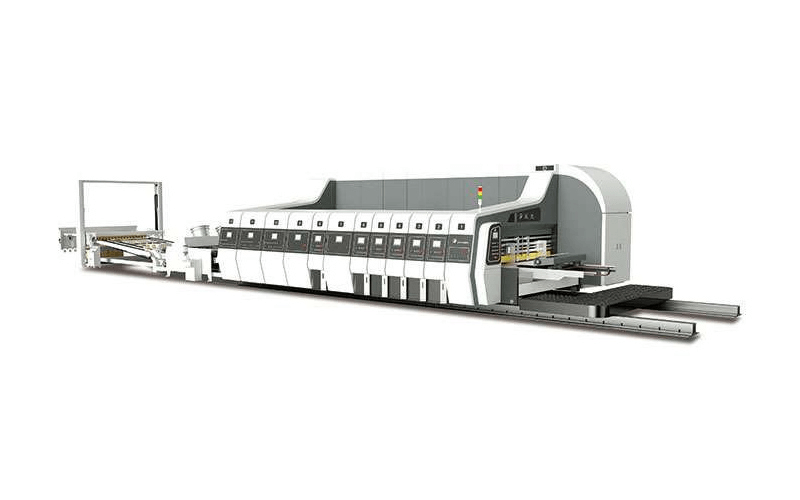
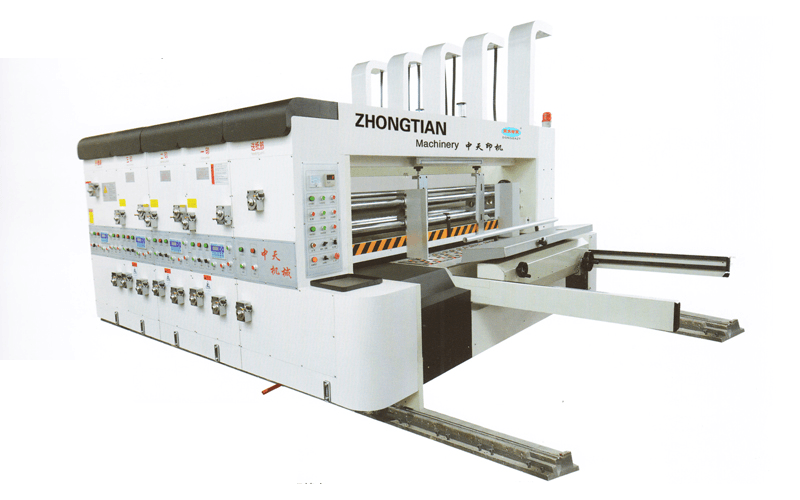
Our premier Flexo Printer Slotter lines feature automated, closed-loop ink circulation pumps, chambered doctor blades, and ceramic anilox rolls. This configuration protects low-viscosity inks from ambient air exposure, limiting solvent vaporization and maintaining uniform ink density across long production runs.
• Contactless Control: Advanced Lead Edge Printer Systems
To prevent linerboard scuffing or fiber peeling caused by fluctuating winter ink viscosities, our high-precision Lead Edge Printer uses vacuum-suction sheet feeding. This system minimizes mechanical friction on the board surfaces, keeping color registration sharp at high operating speeds. For simpler, structural transit box production on a lower capital budget, our heavy-duty Chain-Fed Printer Slotter offers a durable, lower-maintenance mechanical option.
• Inline Downstream Synchronization: Stitching & Gluing Machine Lines
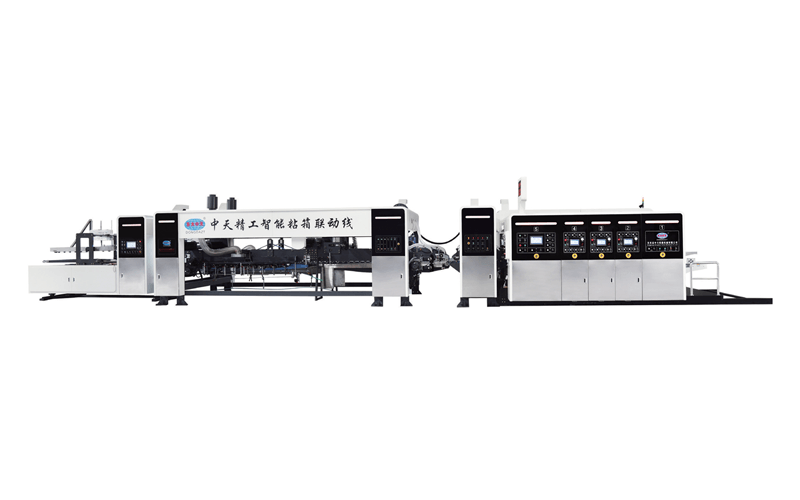
Maintaining stable ink drying speeds allows printed blanks to pass directly into inline folding, gluing, and counter-bundling modules. Combining a High-Speed Flexo Printer directly with an inline Stitching & Gluing Machine, supported by automated Corrugated Peripheral Machinery (including auto-feeders and down-stackers), allows your plant to run a touchless, high-efficiency production floor.
🚀 Eliminate Production Color Variations and Minimize Scrap Rates
Are seasonal color shifts, frequent plate cleaning stops, or ink ghosting issues bottlenecking your factory's daily output? Upgrade your plant floor to world-class converting standards.
As an elite international developer of industrial-grade Corrugated Packaging Machinery, we construct high-speed converting lines featuring automated ink circulation systems, digital controls, and synchronized inline finishers engineered to lower operational waste and maximize plant ROI.