Legacy vs. Modern Corrugated Board Processing: Eliminating Hidden Uptime Killers in Your Box Plant
A historical comparison of traditional manual box-making methods against advanced, automated Corrugated Carton Machinery to maximize production throughput.
The Anatomy of the Traditional Manual Corrugated Processing Method
Historically, manufacturing corrugated sheets and containers relied completely on stand-alone, decoupled single machines and labor-intensive, semi-mechanized manual operations. Under this legacy approach, producing finished board required an exhausting five-stage workflow:
1. Roll Stock Cutting (Rotary Blade) → 2. Sheet Alignment → 3. Manual Splicing/Collation → 4. Basic Top-sheet Printing → 5. Flute Pressing & Manual Adhesive Lamination
To achieve a standard 3-layer single-wall board, base paper webs were chopped into specific sizes, corrugations were rolled out on standalone single-facers, and sheets were hand-delivered via canvas belts to separate gluing stations where the adhesive was brushed across flute peaks before pasting on face and liner papers.
For heavy-duty 5-layer double-wall sheets, operators meticulously layered components manually: face liner → corrugated medium → center liner → corrugated medium → back liner. Crucially, freshly laminated boards then had to undergo more than 8 hours of structural compression weight and natural air drying before being moved to downstream finishing steps.
The Modern Bottleneck: Why 8-Hour Curing Fails the E-Commerce Boom
While the legacy approach was highly adaptable for low-volume regional trade decades ago, it acts as a critical bottleneck for modern plant floors. Waiting 8+ hours for adhesive crystallization creates major factory footprint clutter and slows down distribution logistics.
With rising global demands for lightning-fast e-commerce packaging, variable SKUs, and razor-sharp box quality, modern buyers cannot afford slow manual alignments, delamination, or crooked registration. Scaling a business requires complete automation via a dedicated, heavy-duty Corrugated Box Making Machine framework.
Upgrading to Next-Gen Corrugated Packaging Machinery
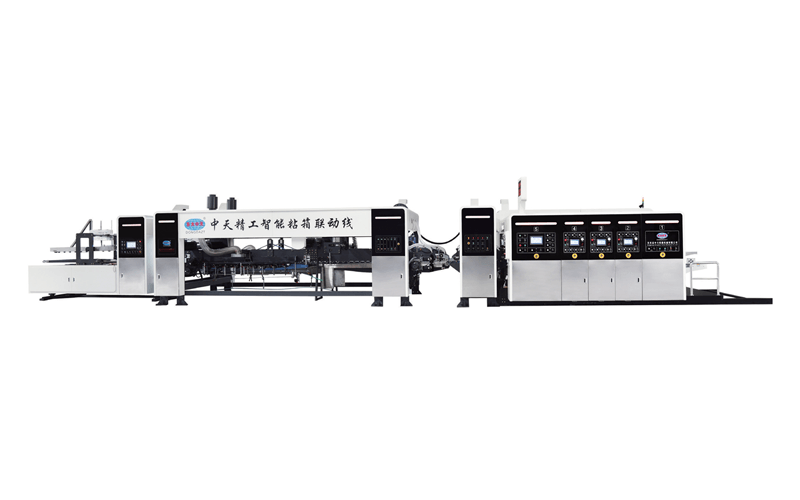
By integrating modern, high-speed converted lines, plants can compress the legacy five-step process into a single, seamless automated flow. Raw corrugated blanks go in, and finished, bundled boxes come out within seconds.
• The Standard: High-Speed Flexo Printer Slotter
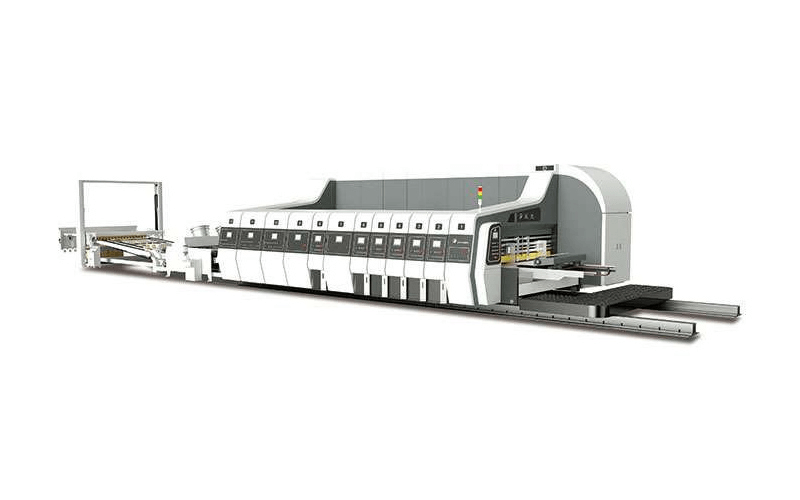
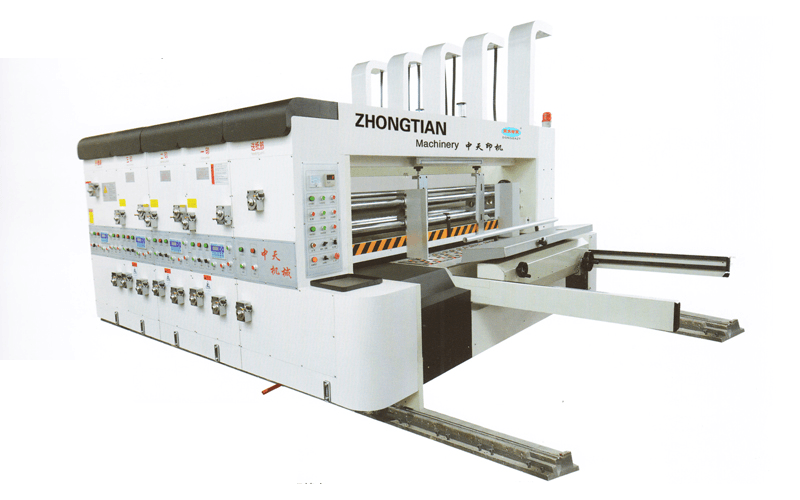
Eliminate detached standalone printing and hand-slotting. Investing in a multi-color Flexo Printer Slotter allows operators to execute high-density graphics, creasing, and slotting inline. Upgrading to a High-Speed Flexo Printer equipped with dynamic vacuum transfer ensures ink drying happens instantly—completely eliminating the historical 8-hour waiting cycle.
• Precision Feeding: Lead Edge Printer vs. Chain-Fed Printer Slotter
To avoid sheet slippage or crushed flutes caused by manual feeding, modern converters utilize specialized mechanical feeders. A high-efficiency Lead Edge Printer uses advanced vacuum-suction technology to feed warped or thick multi-wall board with precise registration at maximum speed. For plants seeking robust reliability on a starter budget, a heavy-duty Chain-Fed Printer Slotter provides exceptional mechanical alignment and durability.
• Downstream Finish: Stitching & Gluing Machine
Instead of using labor-intensive manual gluing benches, an inline Stitching & Gluing Machine folds, glues, or fastens the manufacturers' joint flaps instantly, bundling finished boxes at blistering commercial speeds with zero human error.
🚀 Scale Your Output & Eliminate Costly Downtime
Are legacy processes, slow manual turnarounds, or decoupled single machines draining your plant's monthly profits? It's time to build an agile, automated production floor.
As a global premier developer of heavy-duty Corrugated Packaging Machinery, we provide rugged High-Speed Flexo Printer arrays, inline finishers, and a full line of Corrugated Peripheral Machinery (including auto-feeders, pre-feeders, and conveyor logistics) engineered to streamline your operation and skyrocket plant ROI.